
Every year, millions of tons of discarded clothing end up in landfills. Mountains of polyester shirts, cheaply dyed dresses and synthetic jeans pile higher and higher – monuments to our appetite for consumption. Fast fashion’s model is ruthless: make more, sell cheap and move on. Garments are designed to be worn briefly, discarded quickly and replaced without thought. The human and environmental costs are staggering: polluted rivers, underpaid labor and fabrics that will outlast their wearers in the ground.
Against this frenzy, slow fashion and its sibling, upcycled fashion can feel like a whisper in a hurricane. But it is precisely in this imbalance that their power lies.

Craft as Resistance
Slow fashion is not simply about taking longer to make clothes. It is about re-centering craft, material integrity and intention in a system built on speed and disposability. It insists that fashion is not just surface decoration but a chain of relationships: between maker and material, between consumer and community, between design and the planet.
Upcycling, too, transforms waste into resource. It reframes what we consider “discarded” and asks us to look again: Could an old sari become a new jacket? Could factory offcuts evolve into couture? This is not patchwork nostalgia. It is innovation rooted in necessity and it challenges the logic of endless production.
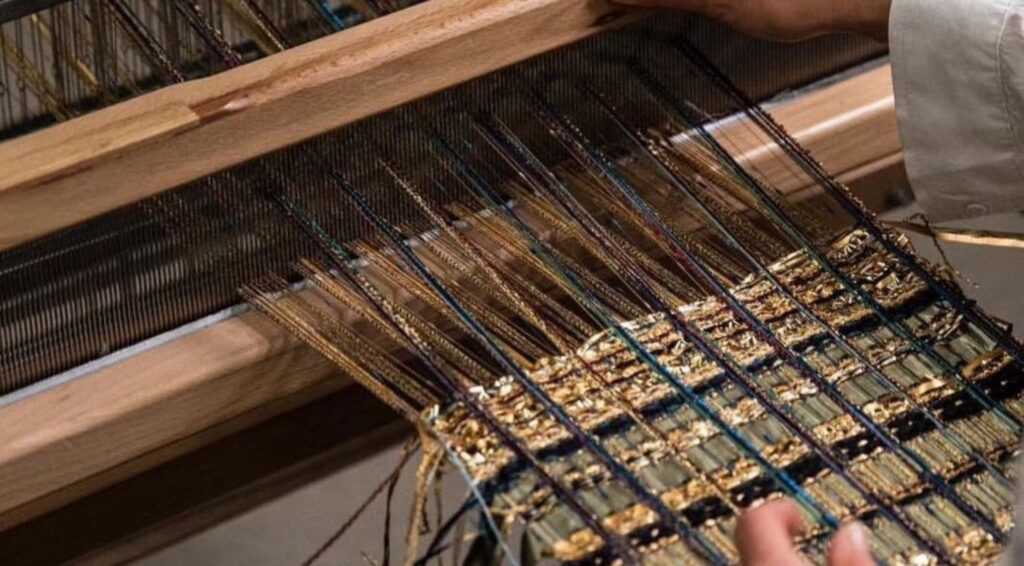
When designers and artisans collaborate on upcycling, they produce more than clothes. They produce narratives of renewal, of making do without settling for less, of reimagining excess as possibility. In a world drowning in surplus, that is radical.
The Market Paradox
Yet the future of slow fashion depends on confronting a paradox: how do you scale an industry that thrives on slowness? The global fashion economy is calibrated for speed, volume and constant novelty. Craft-led production is inherently smaller, slower and often more expensive. Consumers who have grown used to buying five shirts for the price of one handmade garment must shift expectations not only of price but of value.
The answer is not to replicate fast fashion’s pace under the banner of sustainability—that would hollow out the very point of slow fashion. Instead, the challenge is to rewire demand: to make longevity desirable, to reframe care and repair as luxury, to make “enough” fashionable again. This is less about competing with fast fashion head-on and more about reshaping the conversation entirely.

Toward a Conscious Future
The future of slow and upcycled fashion will likely be a combination of grassroots craft practices, designer-led innovation and consumer education. Policy interventions—such as extended producer responsibility laws, restrictions on synthetic waste, or incentives for recycling—could also tip the balance. But real transformation lies in culture: in revaluing slowness as sophistication, in seeing ownership as stewardship and in treating fashion as a relationship rather than a transaction.
This is not an easy path. The crisis of overconsumption is vast and no single solution can dismantle it overnight. But slow fashion offers a compass. It shows us that another rhythm is possible—one that honours the hands that make, the histories embedded in textiles and the planet itself.
If fast fashion represents excess without accountability, slow fashion embodies care as resistance. And in a world suffocated by landfills, the most radical act might be to wear less, to repair more and to remember that clothes, like culture, are meant to be kept, not discarded.