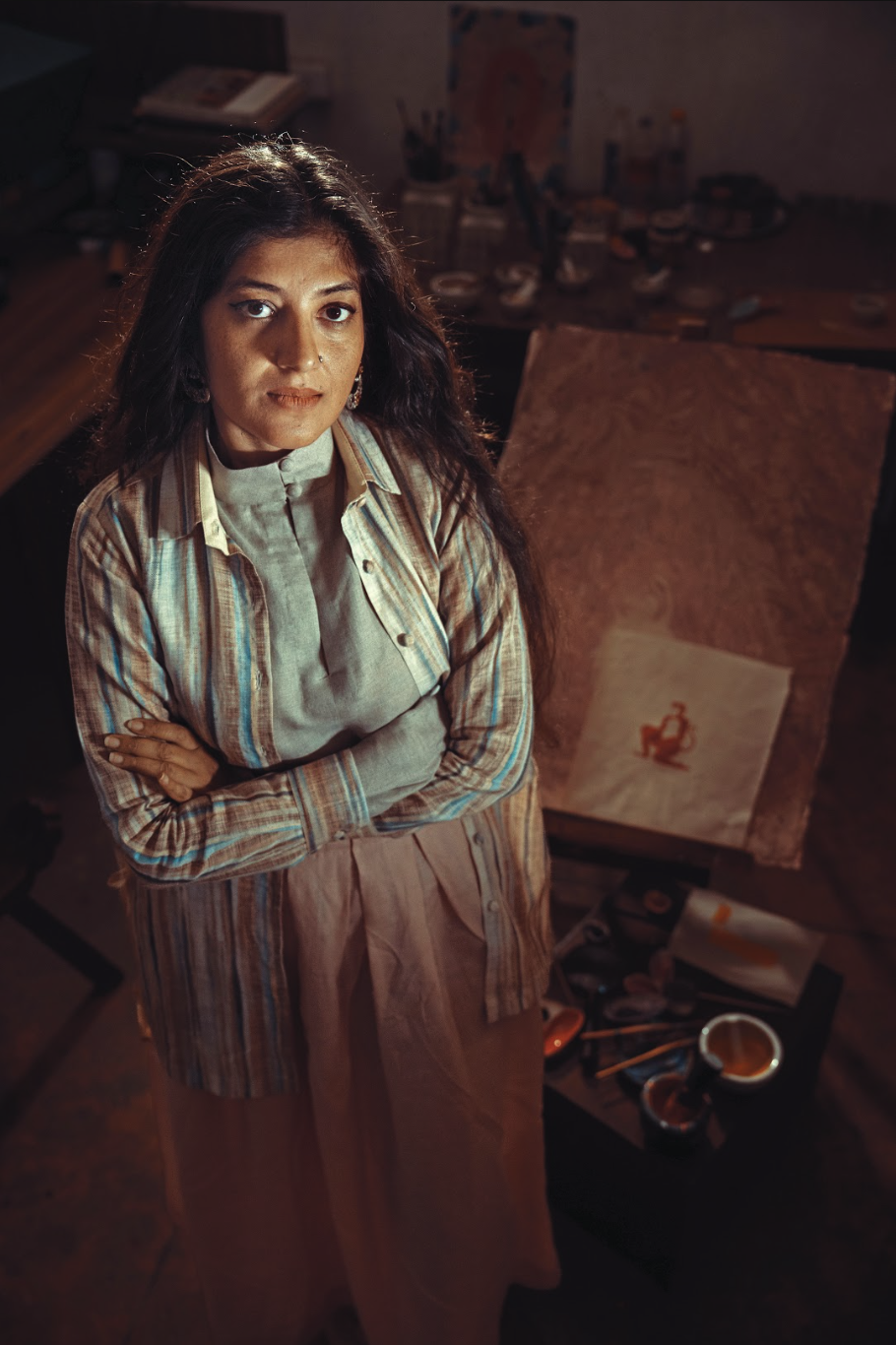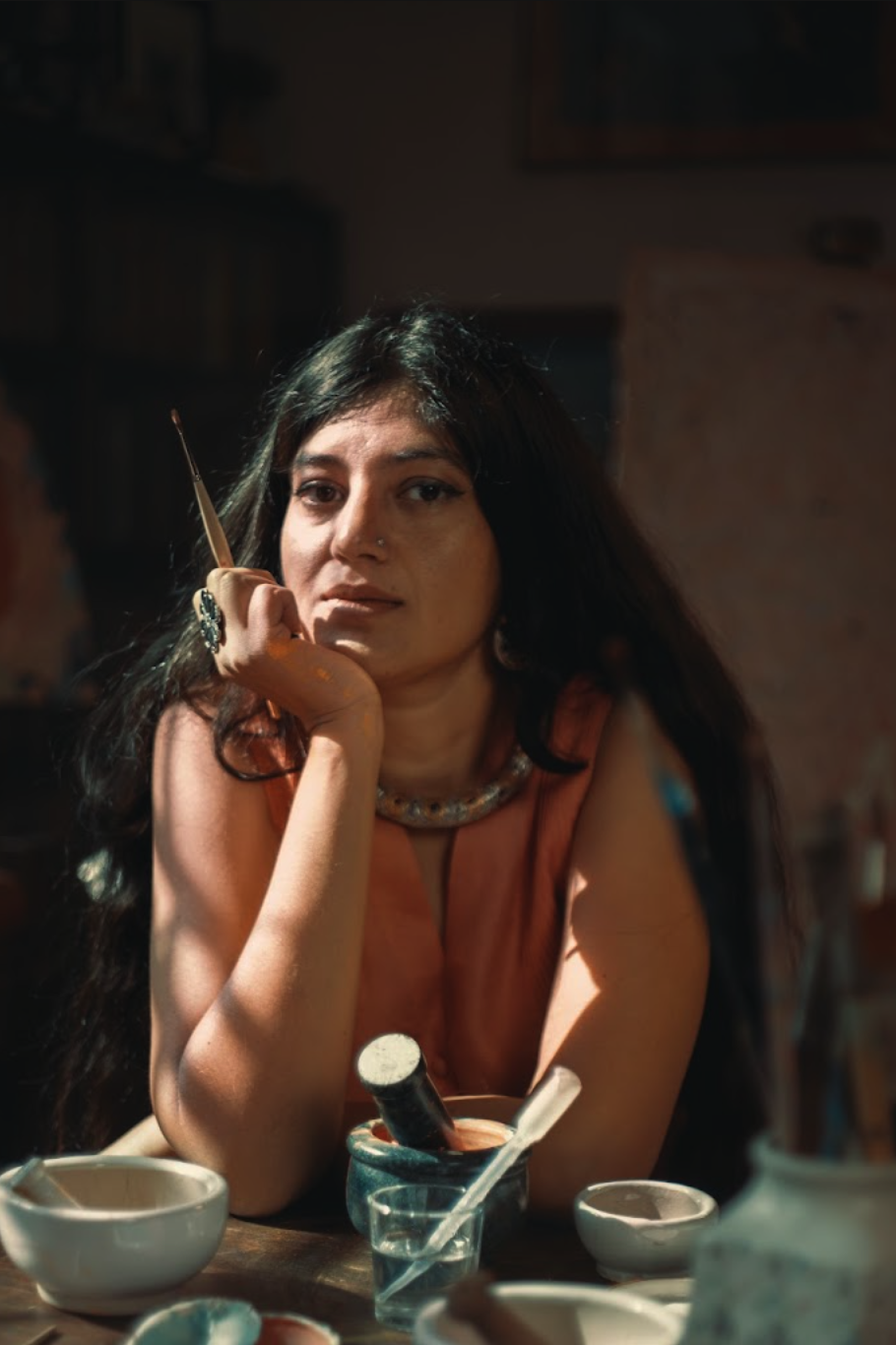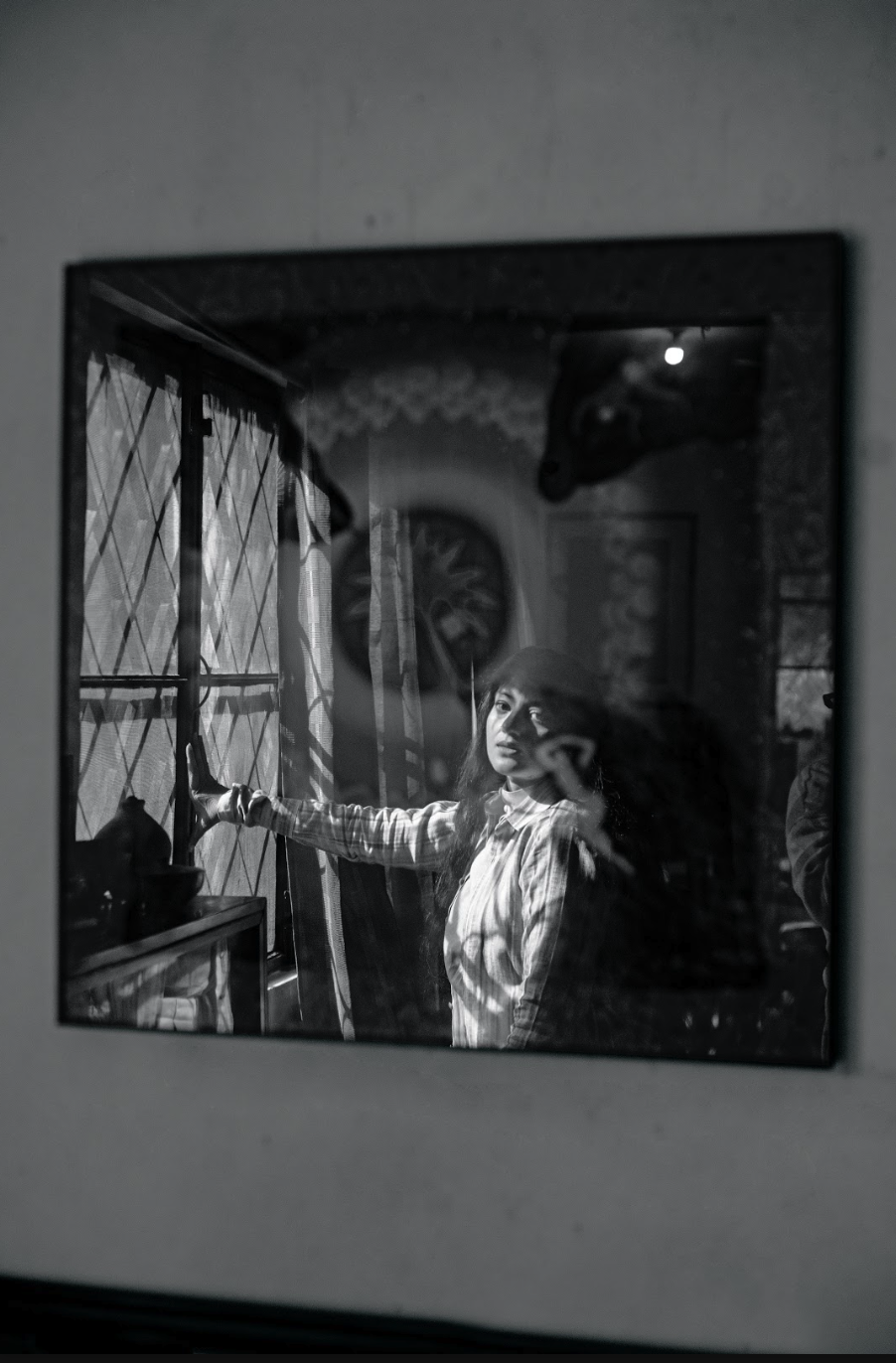
Gargi Chandola, a New Delhi-based visual artist, explores the intersections of personal history, collective memory and inherited traditions through her distinctive artistic practice. Working across Wasli paper and large-scale murals, her work reflects a deep engagement with feminism, everyday experiences and contemporary realities.
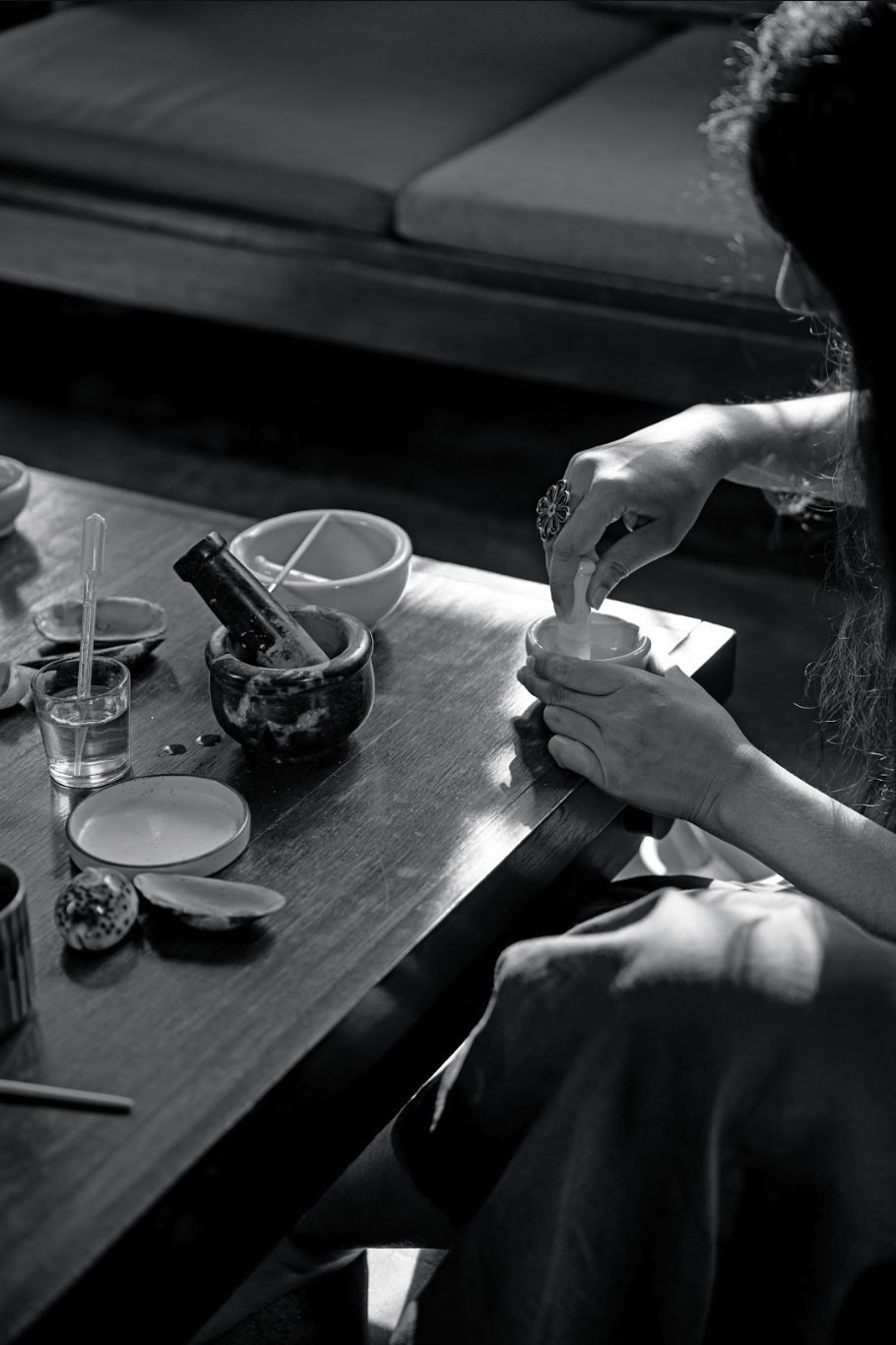
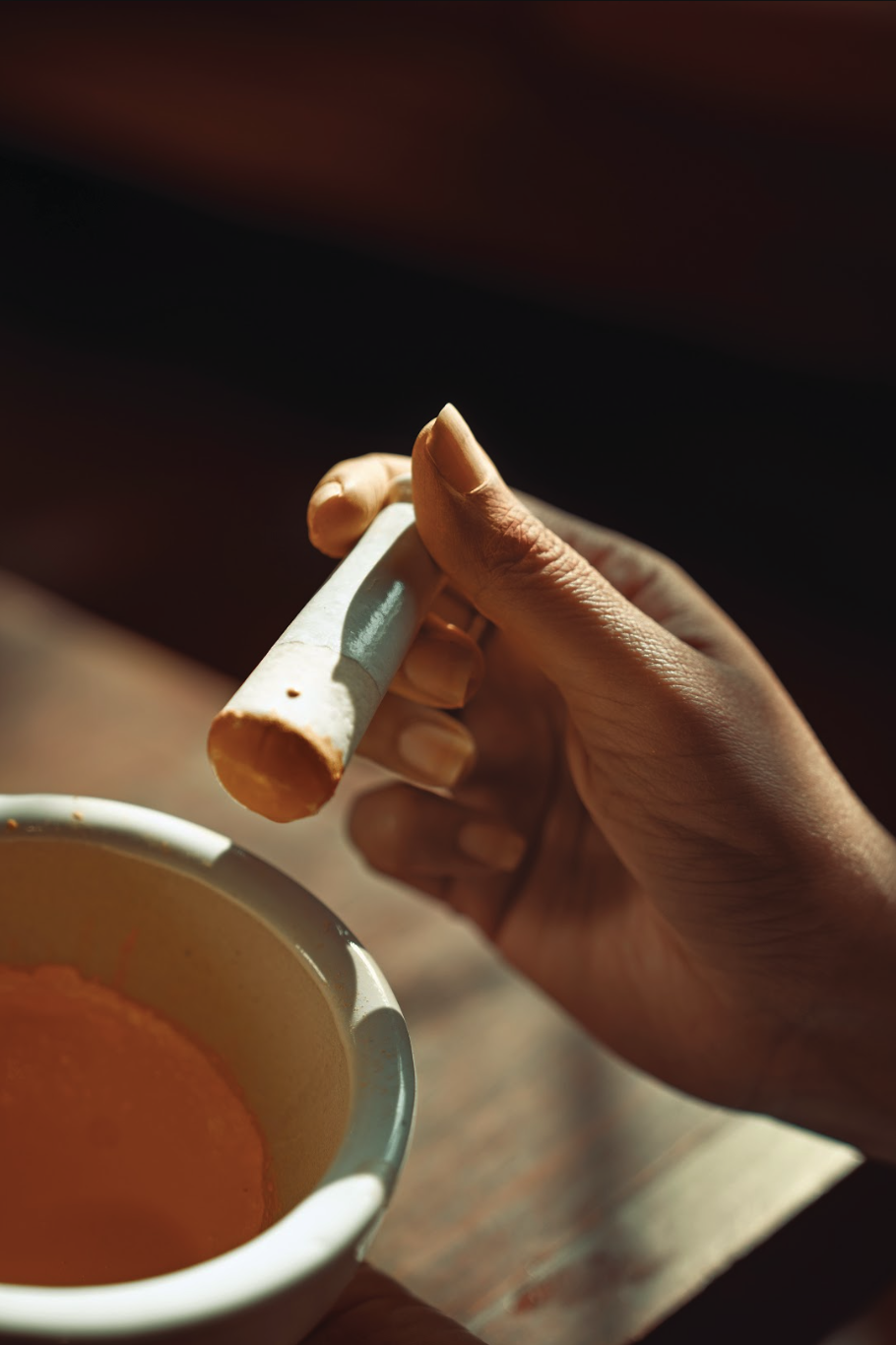
There is a certain patience in Gargi’s practice. It reveals itself through detail, material and the slow inheritance of skill. Currently training in Pahari Miniature painting under a master artist, she continues to learn from a rich artistic lineage while extending these traditions into new spatial and emotional dimensions.
In Gargi Chandola’s universe, animals do not sit on the periphery of human life. They stare back, interrupt, challenge and occasionally mirror us. Her compositions unfold like layered conversations where tenderness sits beside discomfort and humour slips in just when the gaze begins to feel too certain.
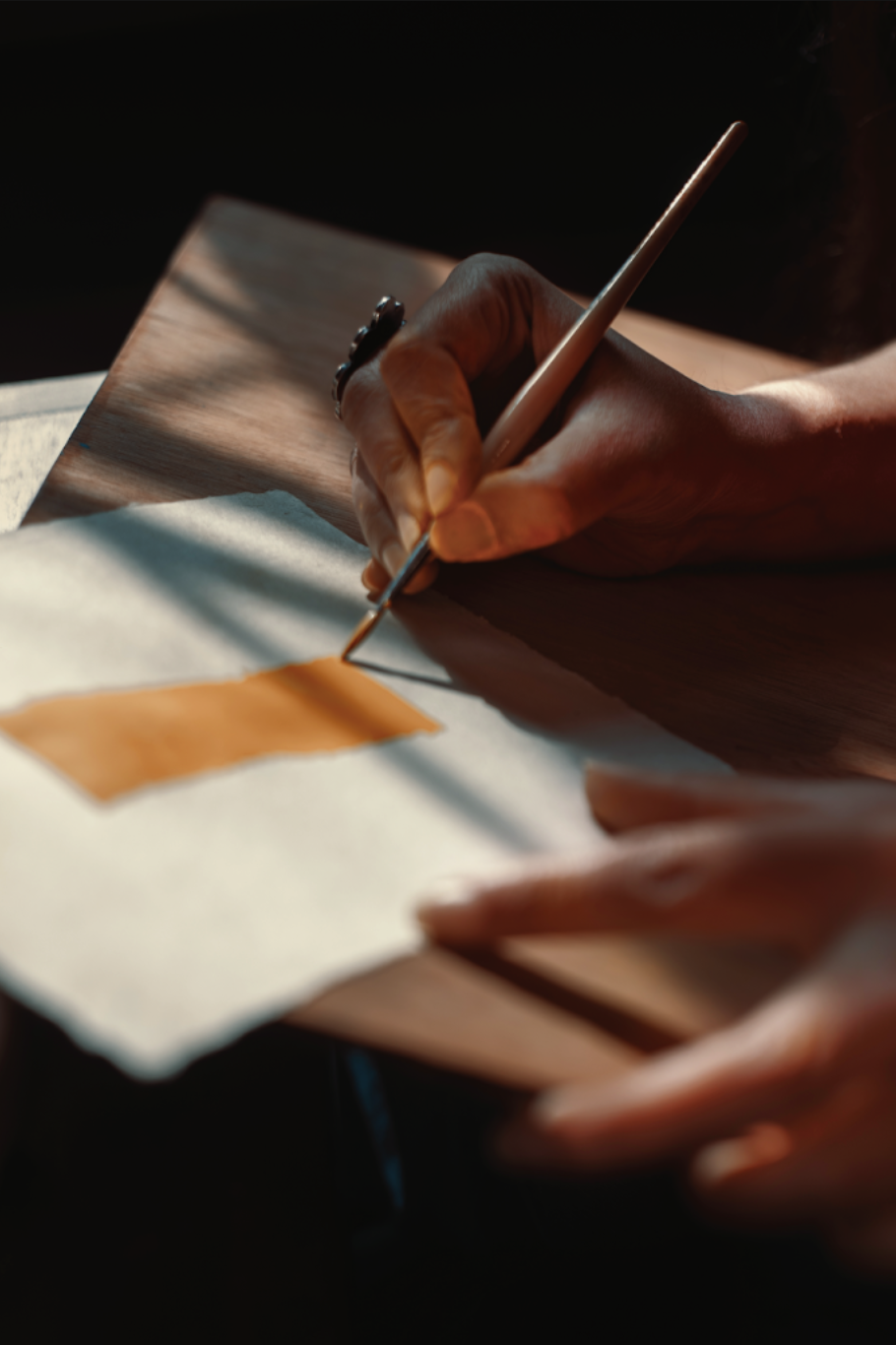
Working primarily on Wasli, Gargi draws from miniature traditions while allowing her subjects to move through contemporary tensions. Domestic scenes, street encounters, fragments of memory and feminist undertones surface as recurring anchors. The result is a body of work that feels intimate yet politically alert, observing how care, control and coexistence constantly negotiate space within everyday life.
Beyond the canvas, Gargi co-founded Post-Art Project, expanding her practice into collaborative and experimental formats. Her work often questions accepted hierarchies, creating space for fragility, humour and resistance to coexist. Through her art, Gargi examines man–animal relationships as reflections of power, vulnerability and coexistence, weaving together personal narratives, violence, memory and the everyday.
As part of Burgoyne Original Masters, Gargi brings a thoughtful and nuanced perspective, where inherited traditions and contemporary inquiry exist in constant dialogue, inviting viewers to reconsider the relationships that shape our shared world.
Gargi Chandola, a New Delhi-based visual artist, explores the intersections of personal history, collective memory and inherited traditions through her distinctive artistic practice. Working across Wasli paper and large-scale murals, her work reflects a deep engagement with feminism, everyday experiences and contemporary realities.
There is a certain patience in Gargi’s practice. It reveals itself through detail, material and the slow inheritance of skill. Currently training in Pahari Miniature painting under a master artist, she continues to learn from a rich artistic lineage while extending these traditions into new spatial and emotional dimensions. In Gargi Chandola’s universe, animals do not sit on the periphery of human life. They stare back, interrupt, challenge and occasionally mirror us. Her compositions unfold like layered conversations where tenderness sits beside discomfort and humour slips in just when the gaze begins to feel too certain. Working primarily on Wasli, Gargi draws from miniature traditions while allowing her subjects to move through contemporary tensions. Domestic scenes, street encounters, fragments of memory and feminist undertones surface as recurring anchors. The result is a body of work that feels intimate yet politically alert, observing how care, control and coexistence constantly negotiate space within everyday life.
Beyond the canvas, Gargi co-founded Post-Art Project, expanding her practice into collaborative and experimental formats. Her work often questions accepted hierarchies, creating space for fragility, humour and resistance to coexist. Through her art, Gargi examines man–animal relationships as reflections of power, vulnerability and coexistence, weaving together personal narratives, violence, memory and the everyday. As part of Burgoyne Original Masters, Gargi brings a thoughtful and nuanced perspective, where inherited traditions and contemporary inquiry exist in constant dialogue, inviting viewers to reconsider the relationships that shape our shared world.
In every brushstroke lies a conversation between memory and the present.
In every brushstroke lies a conversation between memory and the present.
In every brushstroke lies a conversation
between memory and the present.