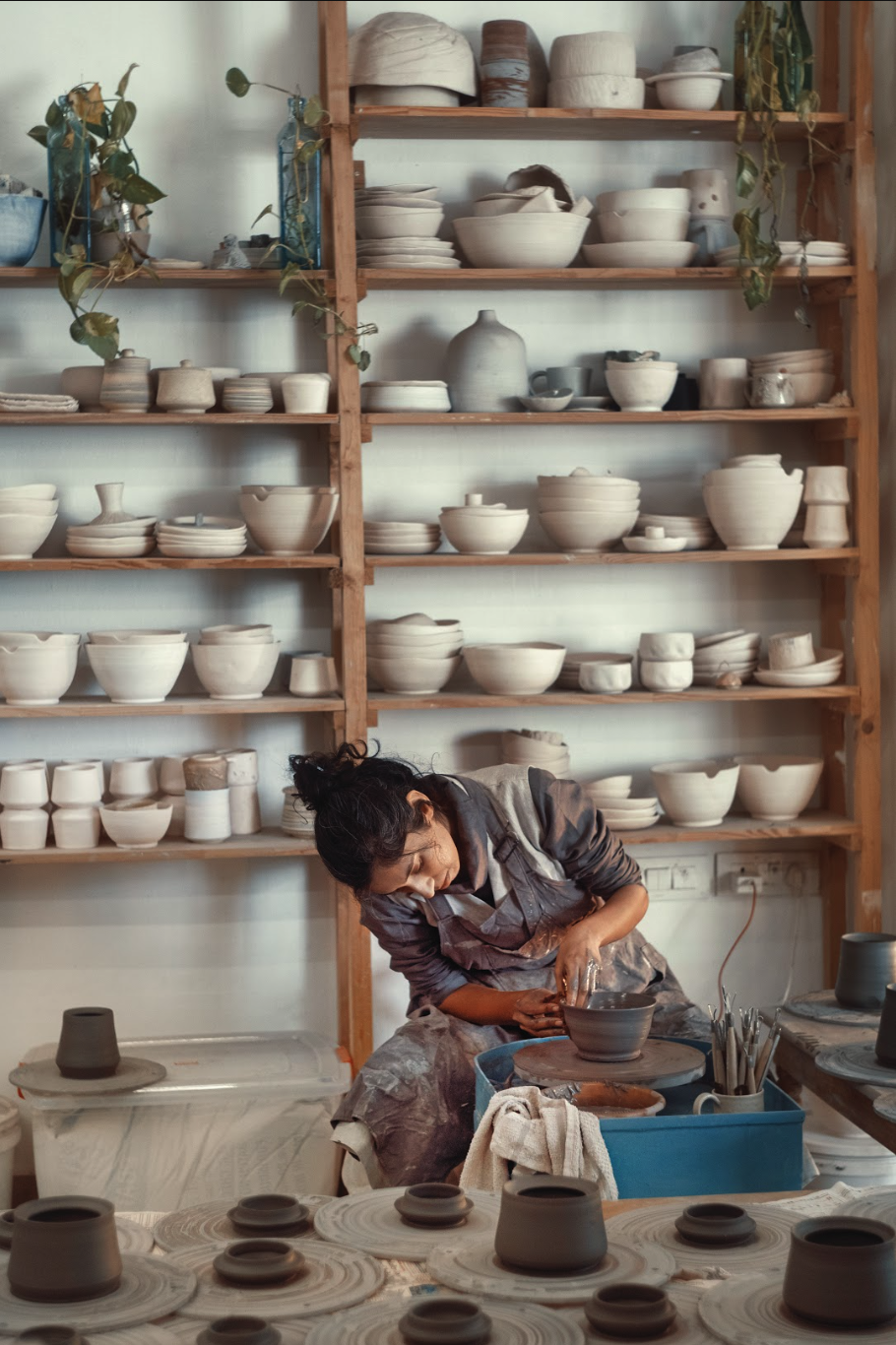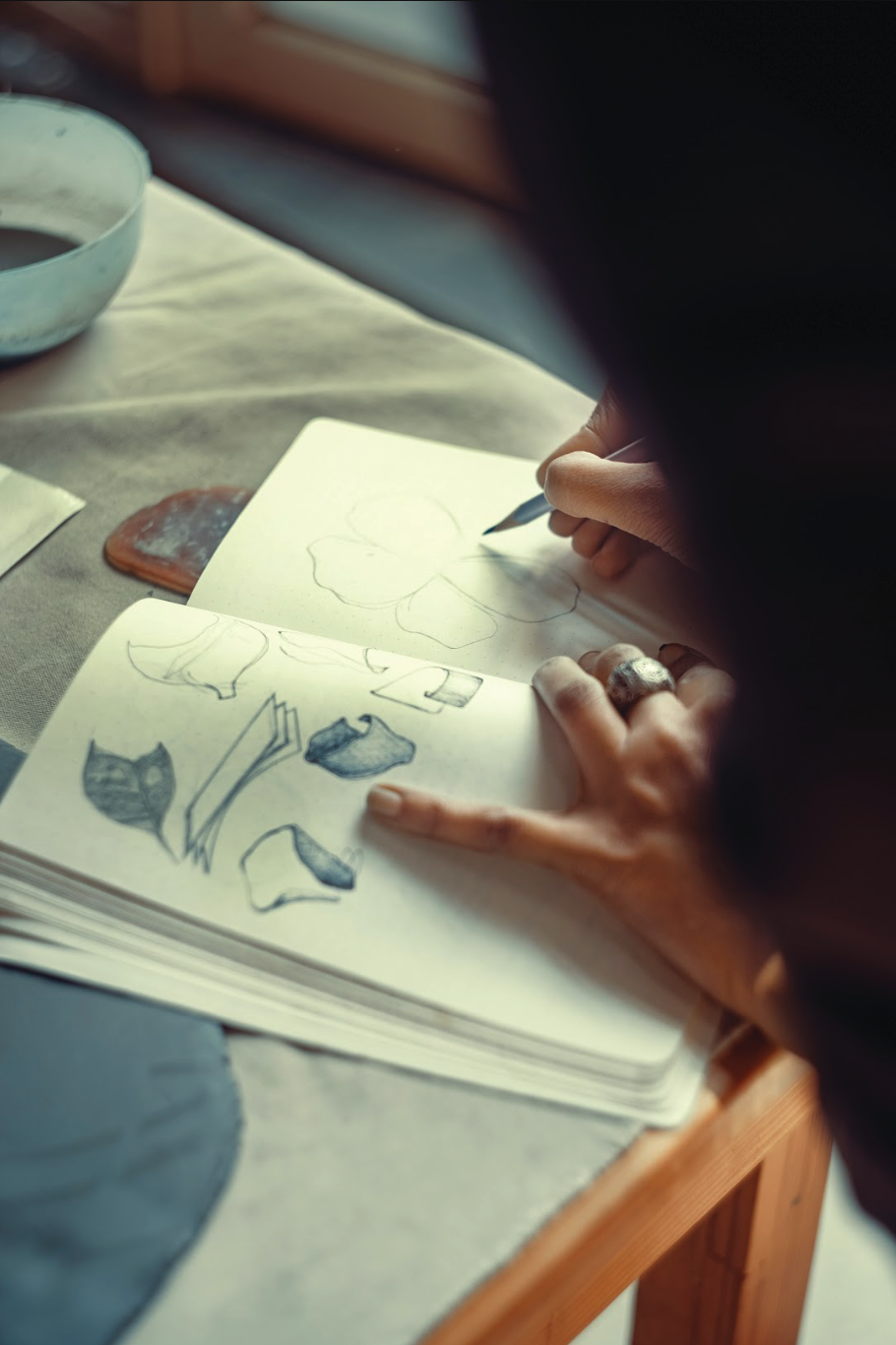
Anumita Jain approaches ceramics as a quiet conversation between maker and material. A product designer and the founder of A Clay Story, her practice is rooted in the belief that true craftsmanship begins not with control, but with attention. Working with clay has taught her that every object carries the memory of the hands that shaped it, transforming everyday utility into an expression of care, patience and presence.
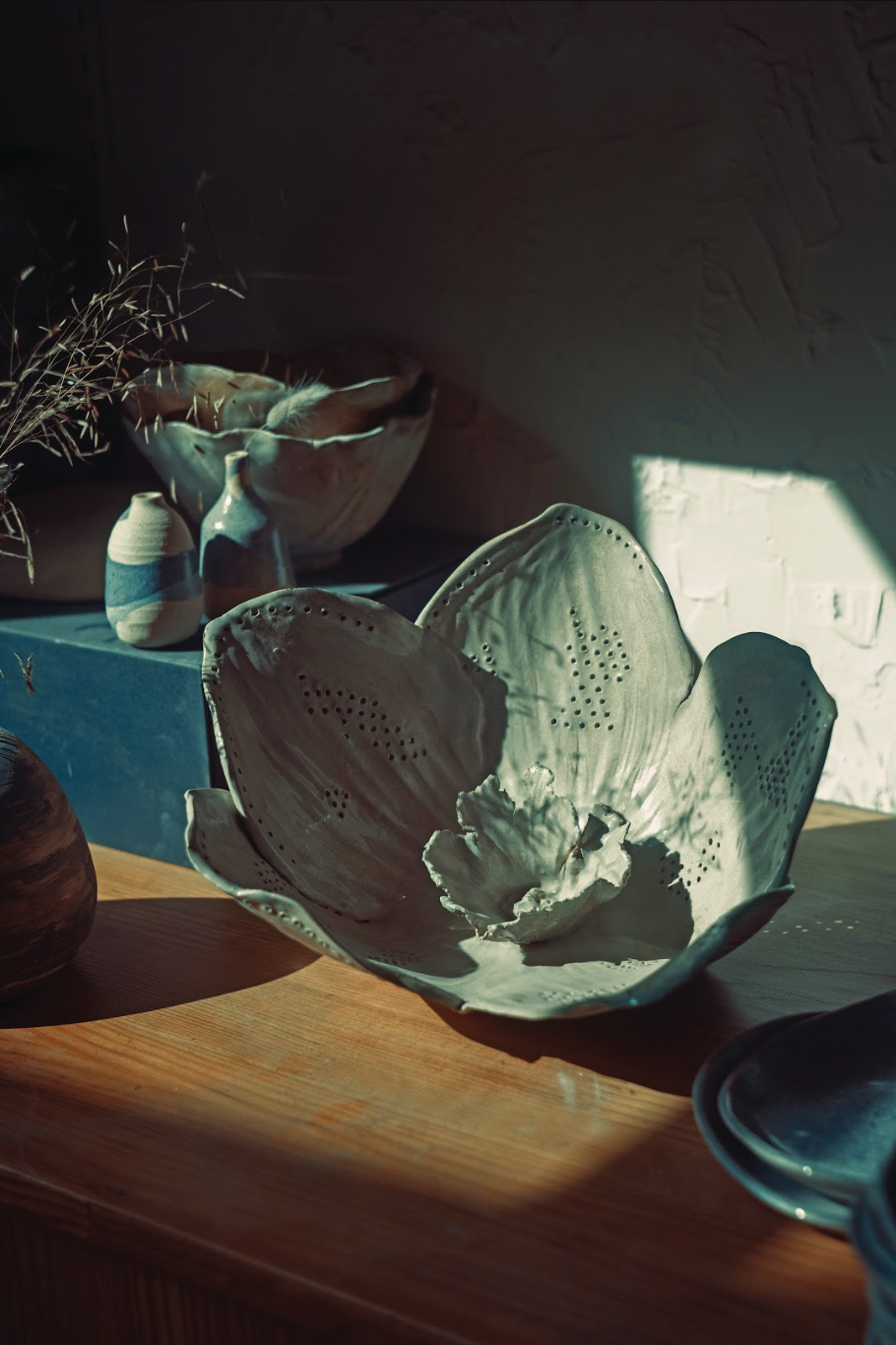
There is a quiet restraint in Anumita’s practice. It reveals itself through timeless forms, organic textures and an understated palette inspired by the natural world. Stepping away from the structured world of industrial design, she immersed herself fully in ceramics, allowing the wheel to become both her studio and her teacher. Over years of working with clay, she has come to understand that the material never asks to be mastered—it asks to be understood.
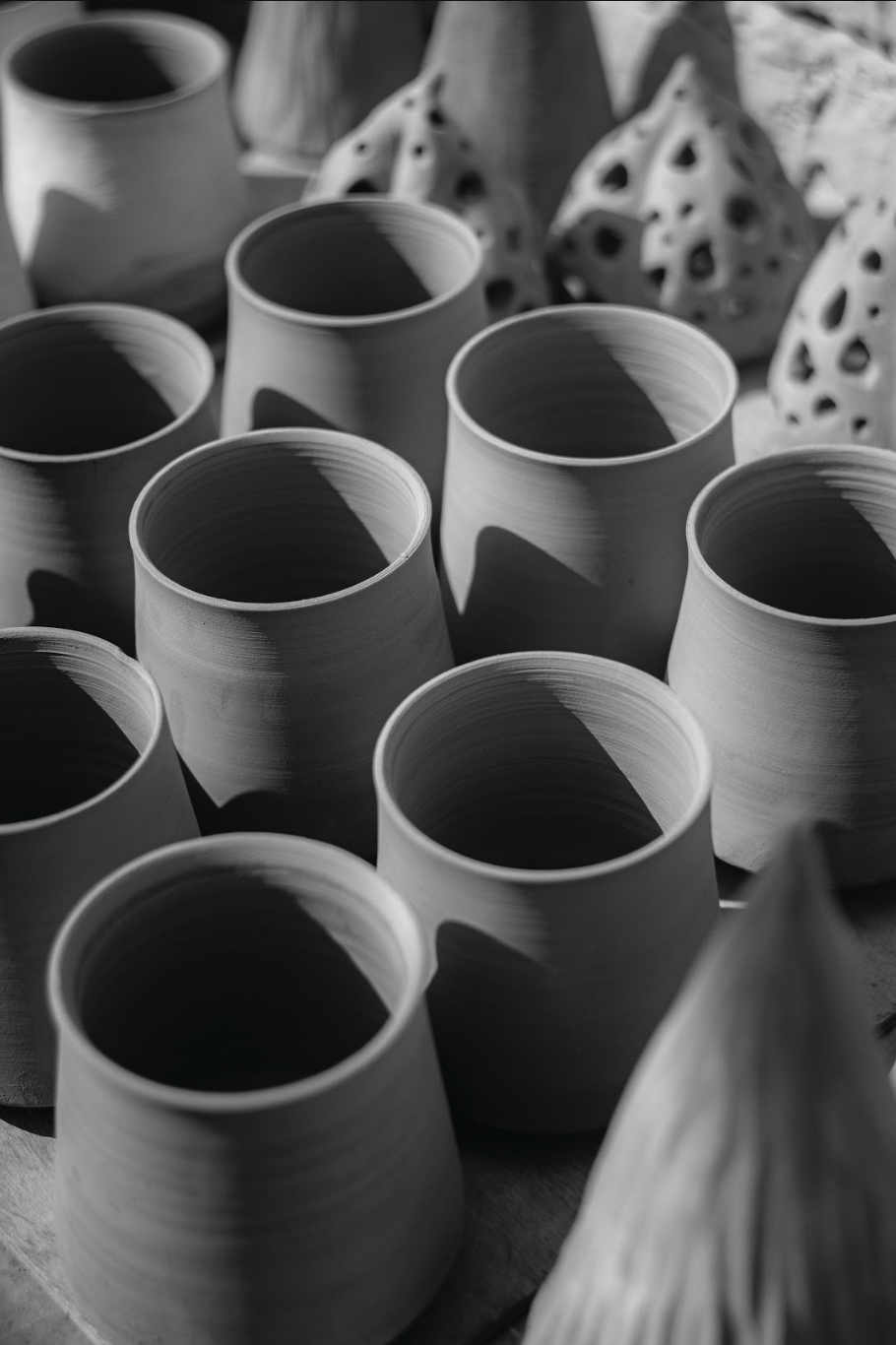
For Anumita, the process is one of continual dialogue. Clay shifts, responds and resists, reminding the maker that perfection is neither the goal nor the measure of success. Each subtle asymmetry, every gentle variation in texture, becomes a record of the moment when material and maker found common ground. It is within these quiet imperfections that her work finds its deepest sense of honesty.
Growing up in Bhopal, her journey towards founding A Clay Story unfolded naturally, with each step leading intuitively to the next. This same sense of fluidity shapes her creative process, where soft, malleable clay is gradually transformed into enduring ceramic forms through the permanence of fire. It is a practice that continually teaches patience, humility and the grace of letting go.
Through a language of minimalism, Anumita creates objects that invite everyday interaction rather than distant admiration. Her work celebrates the rituals that quietly shape our lives, reminding us that thoughtful design belongs not in galleries alone, but in the familiar spaces we inhabit every day. As part of Burgoyne Original Masters, Anumita Jain brings a practice defined by quiet observation, material sensitivity and enduring simplicity—where the beauty of an object lies as much in its making as in the life it goes on to share.
Anumita Jain approaches ceramics as a quiet conversation between maker and material. A product designer and the founder of A Clay Story, her practice is rooted in the belief that true craftsmanship begins not with control, but with attention. Working with clay has taught her that every object carries the memory of the hands that shaped it, transforming everyday utility into an expression of care, patience and presence.
There is a quiet restraint in Anumita’s practice. It reveals itself through timeless forms, organic textures and an understated palette inspired by the natural world. Stepping away from the structured world of industrial design, she immersed herself fully in ceramics, allowing the wheel to become both her studio and her teacher. Over years of working with clay, she has come to understand that the material never asks to be mastered—it asks to be understood. For Anumita, the process is one of continual dialogue. Clay shifts, responds and resists, reminding the maker that perfection is neither the goal nor the measure of success. Each subtle asymmetry, every gentle variation in texture, becomes a record of the moment when material and maker found common ground. It is within these quiet imperfections that her work finds its deepest sense of honesty.
Growing up in Bhopal, her journey towards founding A Clay Story unfolded naturally, with each step leading intuitively to the next. This same sense of fluidity shapes her creative process, where soft, malleable clay is gradually transformed into enduring ceramic forms through the permanence of fire. It is a practice that continually teaches patience, humility and the grace of letting go. Through a language of minimalism, Anumita creates objects that invite everyday interaction rather than distant admiration. Her work celebrates the rituals that quietly shape our lives, reminding us that thoughtful design belongs not in galleries alone, but in the familiar spaces we inhabit every day. As part of Burgoyne Original Masters, Anumita Jain brings a practice defined by quiet observation, material sensitivity and enduring simplicity—where the beauty of an object lies as much in its making as in the life it goes on to share.