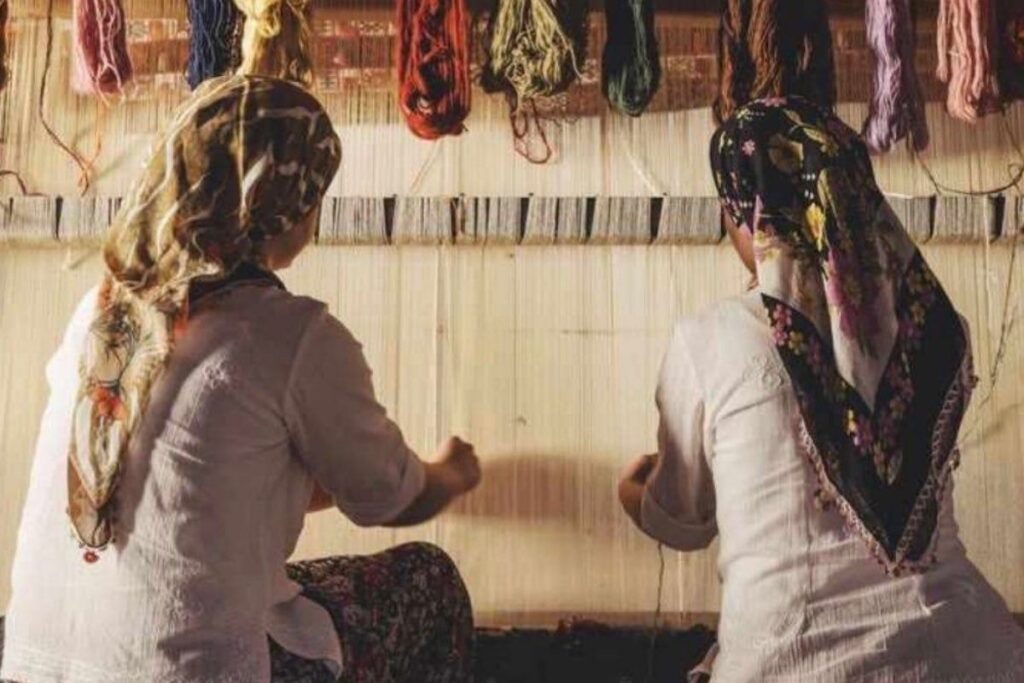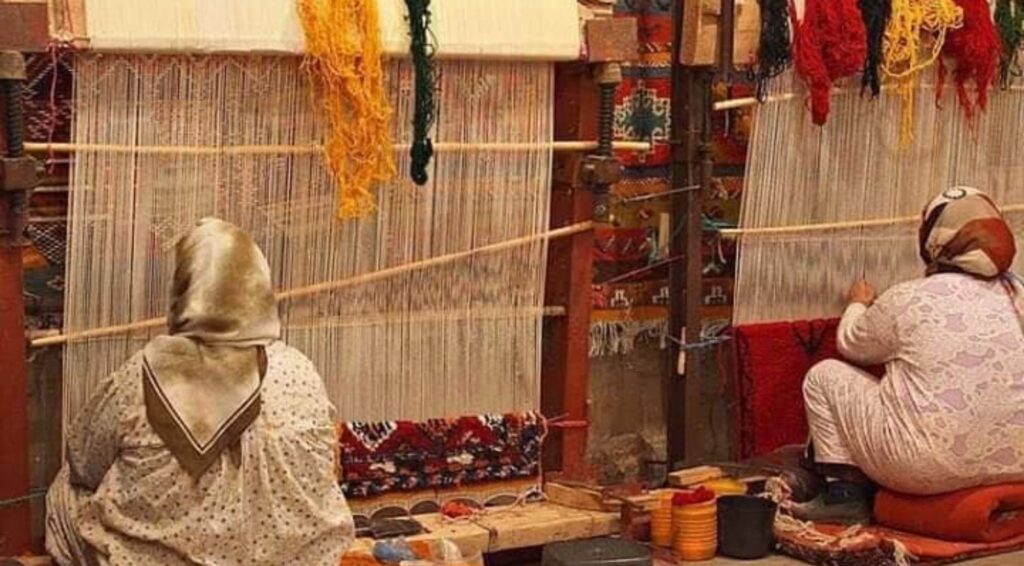
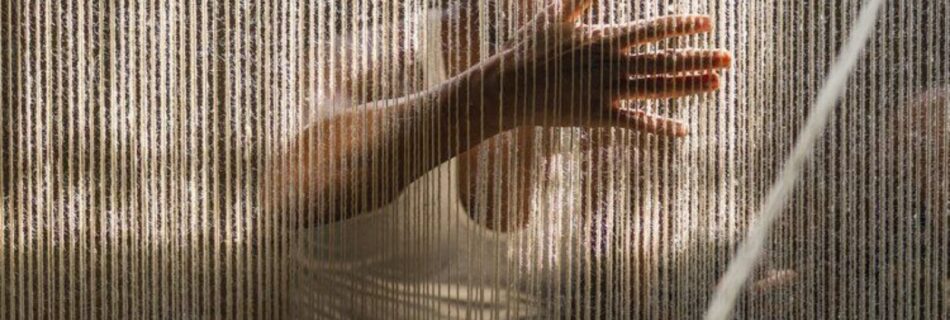
Textiles carry stories of family, community and heritage. What is the role of Textiles in Culture Revival?

Textiles are never just fabric. They are coded with memory—threads that hold the weight of family histories, community rituals and collective identity. A shawl passed down through generations carries the imprint of hands that wove it and the ceremonies it has witnessed. A patterned cloth tells of migrations, resistances and exchanges across borders. In every fiber lies a story of belonging.

In many cultures, textiles serve as a living archive where history is not written but worn. Unlike monuments carved in stone, cloth is fragile, intimate and close to the body. Yet that very closeness gives it power: it becomes part of daily life, a marker of continuity even as worlds shift around it.
Weaving Back What Was Lost

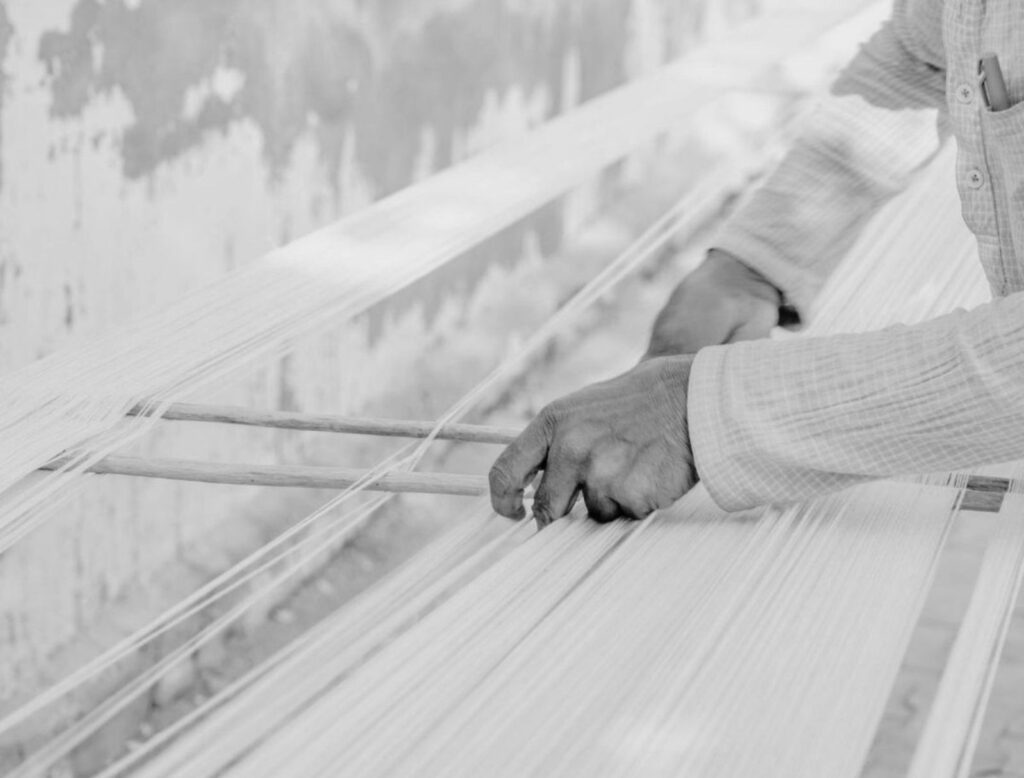
In places where colonization, industrialization and globalization have eroded cultural practices, textiles are becoming a site of revival. Communities are returning to traditional looms, indigenous dyes and ancestral motifs—not only to preserve them but to reassert identity in the present. A revival is not about nostalgia; it is about reclamation.

Reviving textiles is also a way of recovering language, ritual and craft knowledge that risked extinction. When young artisans learn the patterns their grandparents once wove, they are not only mastering technique—they are reconnecting to a worldview.
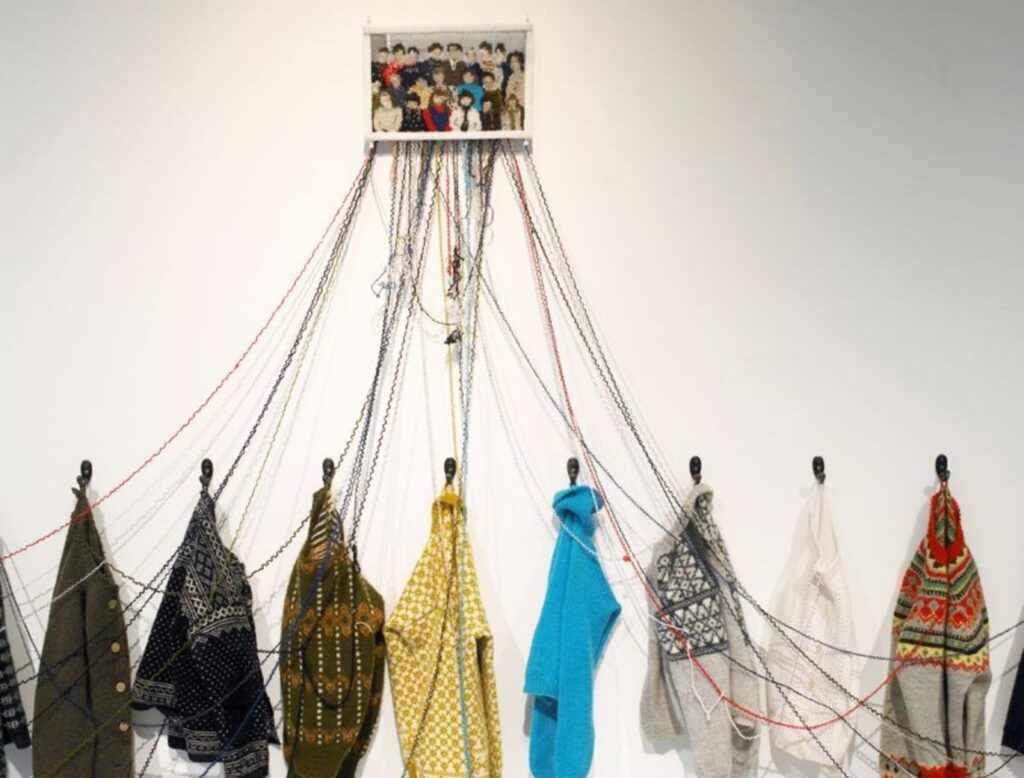
Each motif carries symbolic meaning: fertility, protection, land, or myth. To reweave these designs is to restitch fractured narratives of culture itself.

Beyond Preservation: Resistance and Innovation

Textile revival is not simply preservation. It is also resistance against homogenization. In a world flooded by fast fashion, where machine-made fabrics flatten diversity into seasonal trends, handwoven textiles insist on difference. They announce that culture cannot be reduced to mass-produced motifs or globalized sameness.

But revival does not mean freezing tradition in amber. Many artists and designers are fusing ancient techniques with contemporary aesthetics—updating palettes, experimenting with materials, or collaborating across disciplines. This hybridity ensures that revival is not only about looking backward but about pushing tradition forward. Culture survives not by standing still but by evolving.
The Role of Community

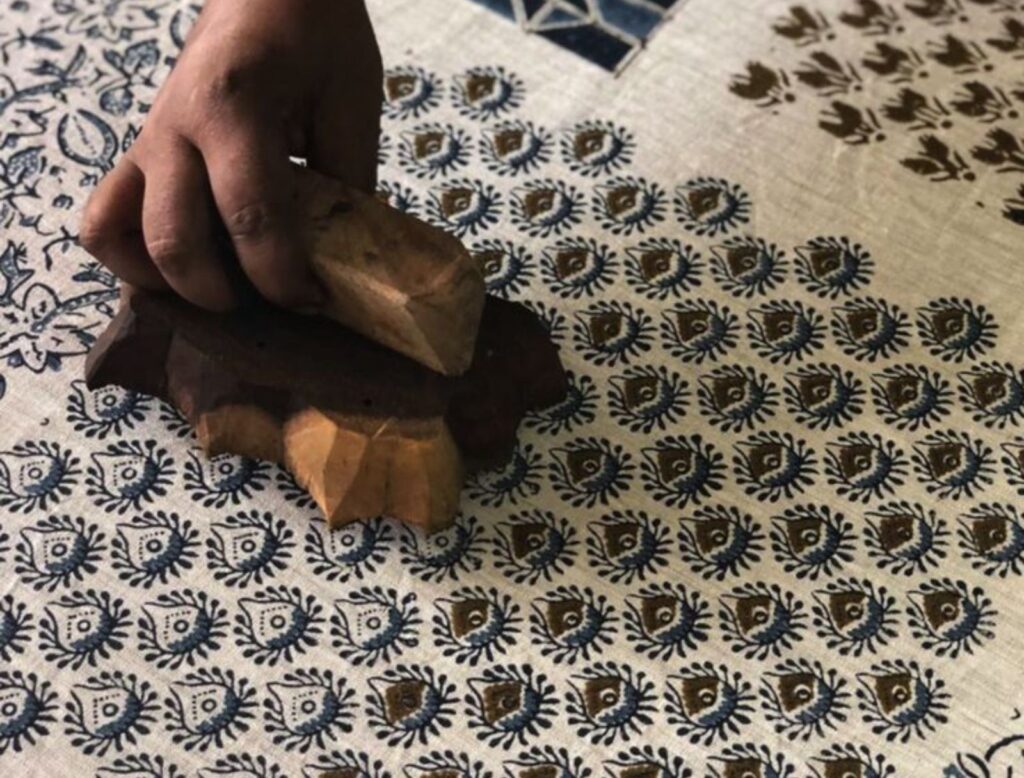
What makes textiles especially powerful in cultural revival is that they are collective by nature. Unlike isolated art objects, textiles are often produced within networks of families, cooperatives and guilds. Weaving brings together shared labor, storytelling and exchange. To revive a textile practice is to strengthen community ties, to create economic lifelines and to affirm social bonds that might otherwise fray.

For diasporic communities, textiles also become a portable homeland. A sari, a kente cloth, a huipil—these are not just garments but connections to place, even when place is distant. Wearing, gifting, or displaying them becomes an act of remembrance and belonging.

A Fabric for the Future

The role of textiles in cultural revival is both symbolic and practical. They preserve knowledge systems, they empower artisans economically and they provide a canvas for communities to reassert identity in turbulent times. In an era where cultural erasure often travels hand in hand with consumer excess, textiles remind us of another possibility: culture as continuity, care and resistance.

The fate of textiles is not confined to museum walls. It lies in daily use – wrapped around bodies, stretched across looms, embedded in households. As long as they are made and worn, textiles will carry culture forward and keep communities thriving.
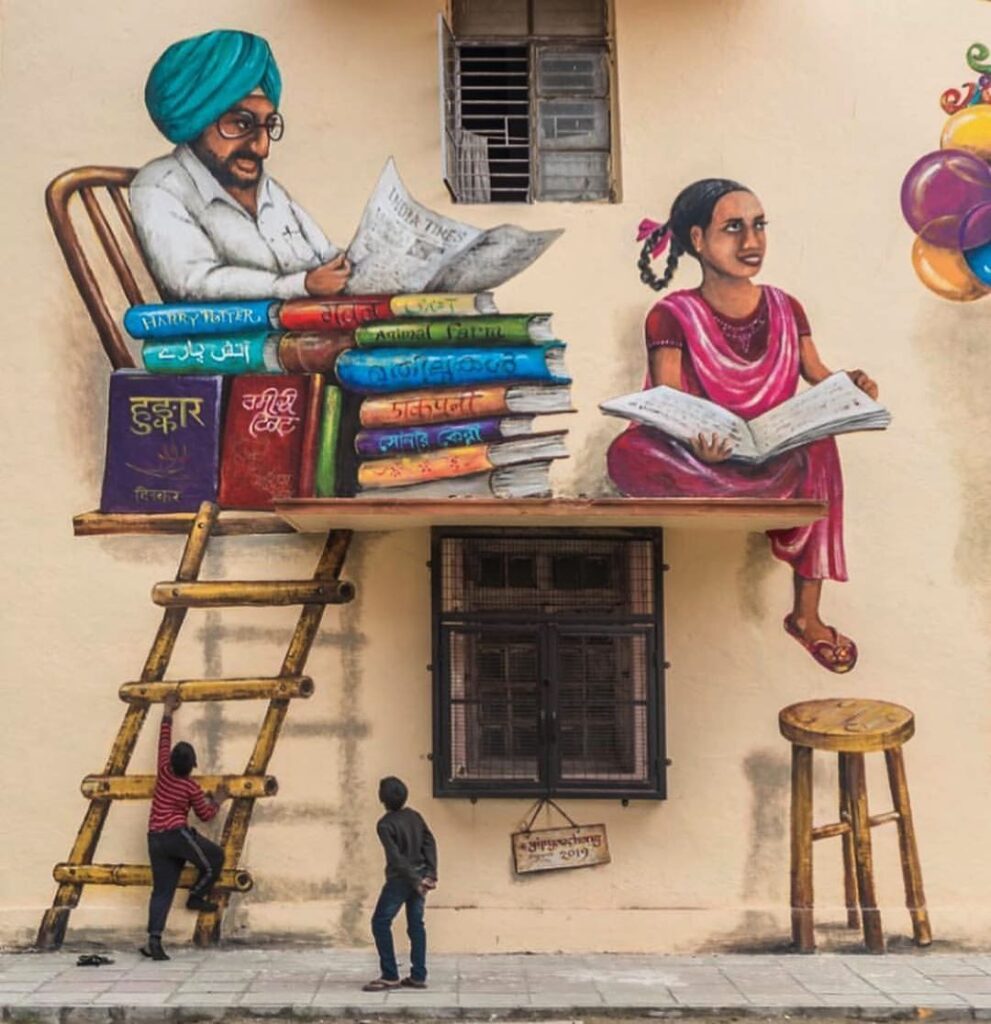
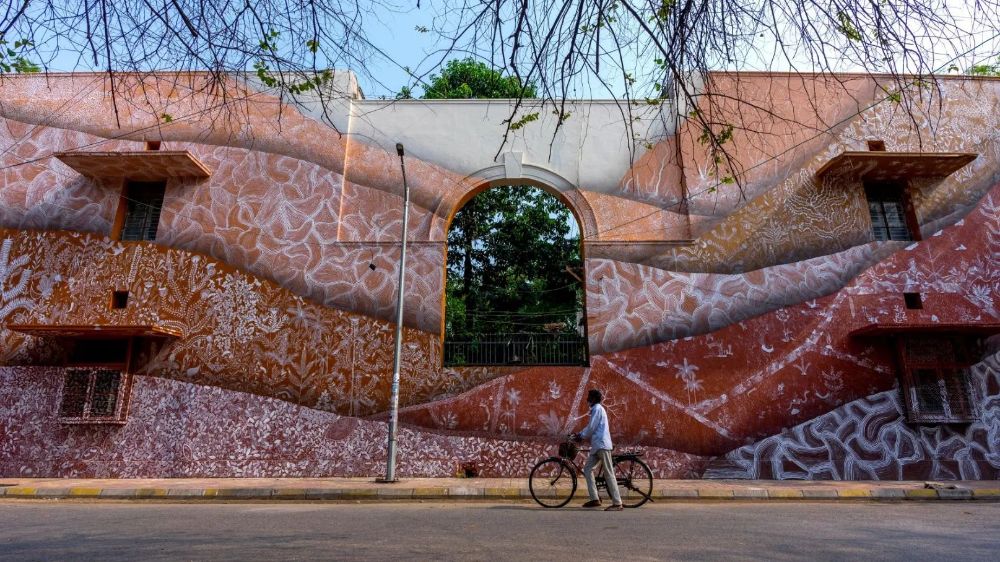
Public Art interventions- What happens when Art steps out of the galleries and into the streets? When Art becomes visible, accessible and rooted in the everyday.

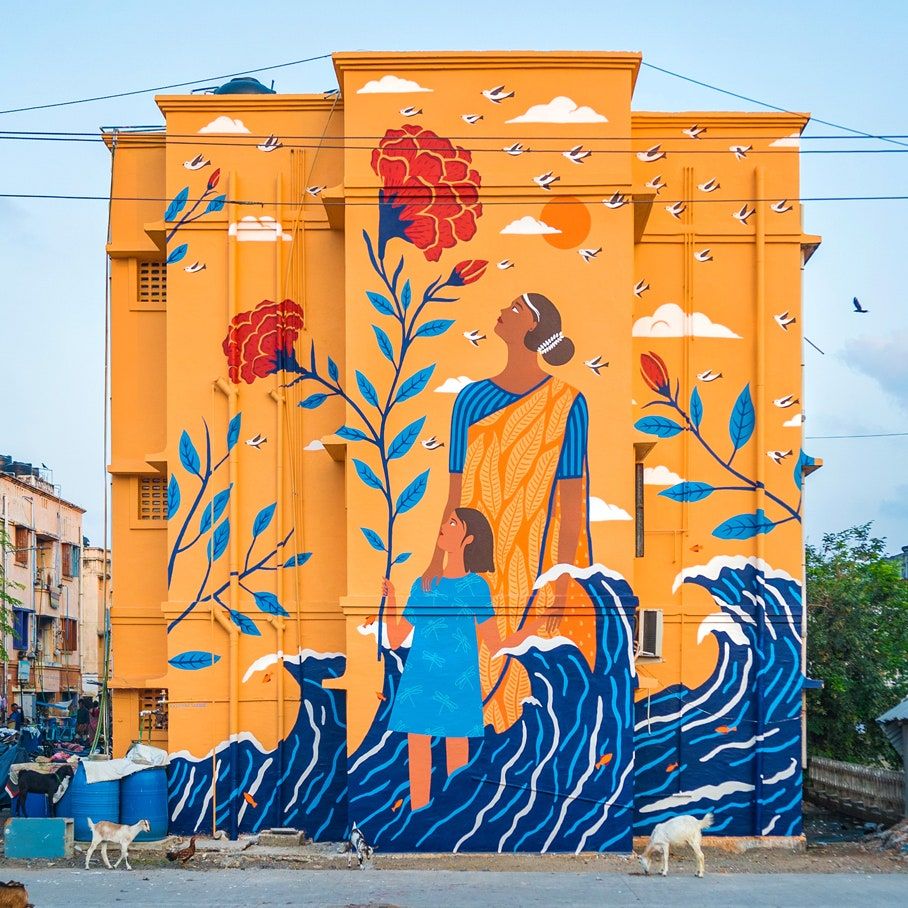
What happens when art steps out of white-walled galleries and into the street? It stops being a destination and becomes an encounter. A mural on the side of a building, a sculpture in a park, a performance unfolding in a marketplace—these interventions disrupt routine and invite reflection where least expected. Suddenly, art is not an event reserved for ticket holders or collectors but something woven into daily life, visible to everyone, unavoidable in its presence.

Public art challenges the idea that art is exclusive, accessible only to those who can afford the time, education, or entry fee. In the street, it belongs to no one and everyone at once. It democratizes visibility, turning the passerby into an audience and sometimes into a participant.

Interventions as Dialogue

Unlike gallery works, public art cannot control its context. It competes with traffic noise, weather, urban sprawl and human movement. But this unpredictability is its strength. Public art thrives on dialogue—between the work and its environment, between the artist and the community, between the object and the lived realities that surround it.

Street murals become platforms for protest, giving voice to demands for justice. Temporary installations reframe neglected spaces, asking people to see their cities anew. Performances staged in public challenge conventions of who art is for and where it belongs.

Each intervention is not just a statement but a conversation, often sparking debate, dissent, or solidarity.

Accessibility and Controversy

To place art in public is also to expose it to scrutiny. Without the protective aura of the gallery, works are judged not by curators but by the public eye. Some pieces inspire pride and belonging; others provoke anger or rejection. Controversy is almost inevitable, but that too is a form of engagement. Art that blends into the background risks irrelevance, while art that stirs conflict proves its vitality.

The accessibility of public art also means it can serve as cultural infrastructure, not just decoration. Murals that honor local history, sculptures that commemorate collective struggle, or installations that highlight environmental crisis turn urban space into a living archive. These works root art in the everyday while ensuring that culture does not exist at a distance from community.

The Future of Public Art

As cities grapple with questions of equity, identity and sustainability, public art is set to play an even greater role. We will likely see more community-led projects, collaborations between artists and activists and temporary works designed to respond quickly to urgent issues. Digital interventions—augmented reality murals, interactive projections—will also expand what “public” means in an increasingly hybrid world.

But the core principle remains unchanged: when art leaves the gallery, it refuses to be contained. It insists on presence, on interruption, on belonging to all.

Public art interventions remind us that creativity does not need a pedestal to matter. On the street corner, on the wall, in the square—it makes culture visible, accessible and alive. And in doing so, it shifts art from object to experience, from commodity to common ground.

In a world consumed by fast fashion and rising landfills, what is the future of slow, upcycled, and craft-led fashion?

Every year, millions of tons of discarded clothing end up in landfills. Mountains of polyester shirts, cheaply dyed dresses and synthetic jeans pile higher and higher – monuments to our appetite for consumption. Fast fashion’s model is ruthless: make more, sell cheap and move on. Garments are designed to be worn briefly, discarded quickly and replaced without thought. The human and environmental costs are staggering: polluted rivers, underpaid labor and fabrics that will outlast their wearers in the ground.

Against this frenzy, slow fashion and its sibling, upcycled fashion can feel like a whisper in a hurricane. But it is precisely in this imbalance that their power lies.

Craft as Resistance

Slow fashion is not simply about taking longer to make clothes. It is about re-centering craft, material integrity and intention in a system built on speed and disposability. It insists that fashion is not just surface decoration but a chain of relationships: between maker and material, between consumer and community, between design and the planet.

Upcycling, too, transforms waste into resource. It reframes what we consider “discarded” and asks us to look again: Could an old sari become a new jacket? Could factory offcuts evolve into couture? This is not patchwork nostalgia. It is innovation rooted in necessity and it challenges the logic of endless production.

When designers and artisans collaborate on upcycling, they produce more than clothes. They produce narratives of renewal, of making do without settling for less, of reimagining excess as possibility. In a world drowning in surplus, that is radical.

The Market Paradox

Yet the future of slow fashion depends on confronting a paradox: how do you scale an industry that thrives on slowness? The global fashion economy is calibrated for speed, volume and constant novelty. Craft-led production is inherently smaller, slower and often more expensive. Consumers who have grown used to buying five shirts for the price of one handmade garment must shift expectations not only of price but of value.
The answer is not to replicate fast fashion’s pace under the banner of sustainability—that would hollow out the very point of slow fashion. Instead, the challenge is to rewire demand: to make longevity desirable, to reframe care and repair as luxury, to make “enough” fashionable again. This is less about competing with fast fashion head-on and more about reshaping the conversation entirely.

Toward a Conscious Future

The future of slow and upcycled fashion will likely be a combination of grassroots craft practices, designer-led innovation and consumer education. Policy interventions—such as extended producer responsibility laws, restrictions on synthetic waste, or incentives for recycling—could also tip the balance. But real transformation lies in culture: in revaluing slowness as sophistication, in seeing ownership as stewardship and in treating fashion as a relationship rather than a transaction.

This is not an easy path. The crisis of overconsumption is vast and no single solution can dismantle it overnight. But slow fashion offers a compass. It shows us that another rhythm is possible—one that honours the hands that make, the histories embedded in textiles and the planet itself.

If fast fashion represents excess without accountability, slow fashion embodies care as resistance. And in a world suffocated by landfills, the most radical act might be to wear less, to repair more and to remember that clothes, like culture, are meant to be kept, not discarded.

The Future of Contemporary Art: How Today’s Artists Are Pushing Boundaries and Using Socio-Political Narratives to Drive Change

Contemporary art is often described as art of “the now”—but that phrase is both too neat and too vague. Unlike earlier movements, contemporary art isn’t defined by a single medium, manifesto, or aesthetic. It is marked instead by a restlessness, a refusal to be pinned down. From immersive installations to digital performance, it thrives on pushing against the boundaries of what art is and who it is for.

At its core, contemporary art is about grappling with the conditions of the present. It speaks to globalization, technology and cultural collisions, but it also makes room for deeply personal, localized stories. That tension—between the global and the intimate, the virtual and the material—gives it both urgency and unpredictability.

Artists as Change-Makers

What sets much of contemporary practice apart is its willingness to engage with the political. Where earlier art movements often insisted on autonomy from politics, today’s artists actively collapse that divide. They treat the gallery as a forum, the museum as a site of debate, the artwork as a tool for intervention.

Artists are interrogating borders, gender, labor, surveillance, climate catastrophe and racial injustice—not from the sidelines, but as participants shaping discourse. For example, works that reuse waste materials are not just about form; they are statements on environmental crisis. Performances that center marginalized voices aren’t “commentary”—they are embodiments of lived resistance.

This shift signals a deeper redefinition of art’s role. The contemporary artist is no longer simply a maker of objects but a mediator, activist and sometimes agitator. By embedding socio-political narratives into their practice, artists position themselves as catalysts for change rather than passive observers.

The Future of the Contemporary

So, what comes next? If the past decades have been defined by hybridity and critique, the future may lean even further into collectivity and accountability. Expect to see artists building collaborations that blur the line between art and activism, creating works that live not only in galleries but in communities, streets and digital spaces.

Technology will remain both a tool and a battleground—AI, NFTs and virtual reality expanding what art can look like while also raising questions of labor, authorship and equity. Yet even as the digital accelerates, there will likely be a countercurrent: a return to the tactile, the embodied, the hand-made, as antidotes to the disembodied screens we inhabit daily.

What is certain is that contemporary art will not sit still. Its very premise is that the world is in motion and art must respond, however chaotically. And in this turbulence lies its strength: it mirrors the complexity of our time while offering ways to imagine beyond it.


Contemporary art’s future, then, is less about style and more about stance. It will be measured not by movements but by momentum—how far it pushes, how deeply it challenges, how boldly it asks: what does it mean to make art in a world that is burning, shifting and rebuilding all at once?

Why do we need to save Handlooms in order to save communities, sustainable practices and generational knowledge?

The Loom as Living Knowledge

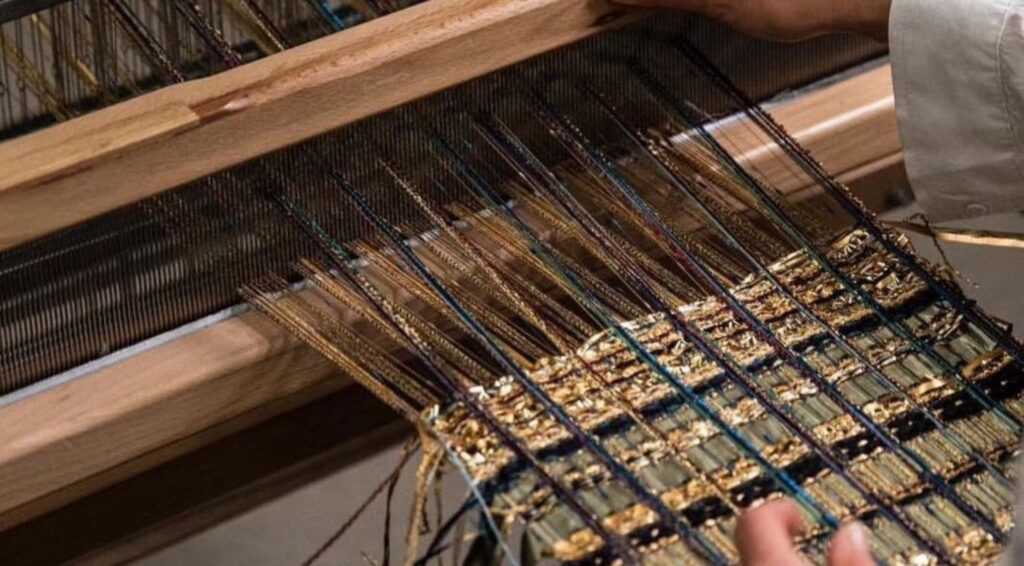
In a world where fashion cycles spin faster than ever, the handloom may look like a relic. Too slow, too labor-intensive, too bound to “tradition.” Yet behind each woven piece lies an ecosystem of knowledge, community and sustainable practice that modern industry cannot replicate. To let handlooms vanish is not simply to lose a textile—it is to sever the threads of generational memory.

For centuries, weaving has been far more than a craft. It has been livelihood, ritual and identity. Families in India, Guatemala, Nigeria, Peru and beyond have passed down not only techniques but entire ways of seeing and living with their environments. A handloom weaver knows which cotton grows best in certain soil, which plants yield durable dyes, how to combine colors and motifs that carry stories of lineage, land and belonging. This is not just design. It is history encoded in fabric, sustainability embedded in instinct, art carried forward through daily work.

Beyond Sustainability: A Fight for Survival

The contrast with the contemporary textile industry is stark. Polyester fills landfills. Synthetic dyes poison rivers. Fast fashion churns out garments designed to fall apart, so the next cycle of production—and consumption—never stops. The handloom offers a radically different model: cloth that breathes, production that does not demand fossil fuels, textiles made to endure. Sustainability is not a marketing term here; it is the baseline.

But the story doesn’t end with sustainability. Economic survival is equally urgent. Many handloom artisans today face underpayment, exploitation, or outright displacement. Machine-made fabrics mimic traditional patterns at a fraction of the cost, saturating markets and leaving communities unable to compete. Younger generations, seeing little financial stability in weaving, are abandoning the loom. What unravels in the process is not just craft but community itself.

Saving handlooms, then, is not simply about preserving aesthetics or techniques. It is about ensuring fair wages, building markets that value authenticity and creating pathways for younger artisans to sustain livelihoods while carrying traditions forward. Without economic justice, the loom cannot survive.

Threads of Identity, Threads of Resistance

What is at stake is also cultural equity. Every handloom is more than fabric—it is a living archive. Motifs tell the story of migrations, battles and myths. Weaves carry ritual meaning, often tied to births, marriages, or harvests. Structures of knowledge—ways of measuring, counting and designing—are not written in books but embedded in practice, shared across generations through the act of weaving itself.

The disappearance of handlooms would mean erasing centuries of lived experience under the pressure of industrial uniformity. And yet, these textiles are not simply nostalgic. They are resilient, adaptive and deeply relevant in a world seeking alternatives to overconsumption. Supporting handlooms is not about clinging to the past; it is about choosing a future that resists disposability.

To save handlooms is to protect more than fabric. It is to uphold systems of sustainable production, safeguard cultural memory and keep alive the creative resilience of communities who have survived colonization, globalization and industrial displacement. The loom is not just a tool – it is a philosophy, a reminder that radical futures can be built from the oldest practices.

In the end, the question is not whether handlooms can survive, but whether we can afford to let them disappear. Because when the loom falls silent, so does a community’s voice. And when we fight to keep it alive, we are not only preserving heritage—we are weaving possibility itself.